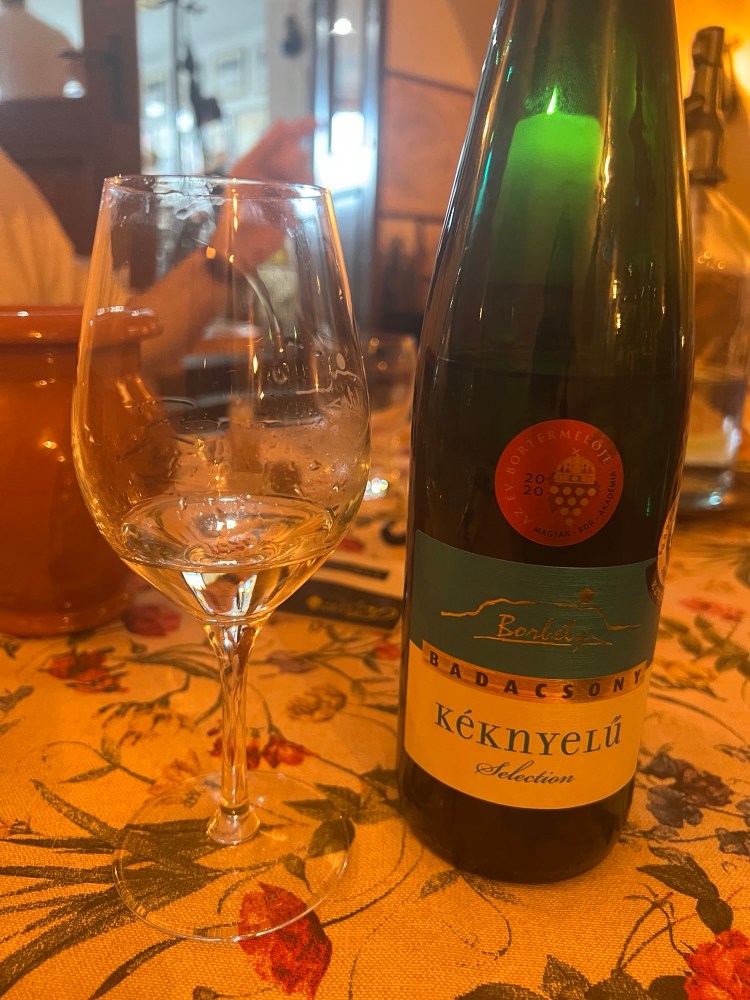
Kéknyelű (Kek-nee-e-loo) is a rare white grape indigenous to the Badacsony region of Hungary. Its name means blue stalk and gets the because the petiole (the part that joins the leaves to the stalk) becomes a light blue color in the fall. Wines are commonly sold in blue glass bottles and many producers choose to use blue lettering on the labels also. It doesn’t fertilize well so it is planted with Budai Zold or Rózsakő to improve fertilization rates. One producer told us they plant 2 rows of Kéknyelű then on row of Rózsakő. It also is a late ripening grape so it benefits from the warm waters of Lake Balaton to help the ripening process. It isn’t easy to manage in the vineyard either and is prone to small yields. The grape was nearly extinct but has been revitalized in the region in recent years with many producers creating wines with the variety. All of the wines we encountered were varietal wines. We didn’t see any blended wines with this grape. It quickly became a favorite of a couple of people on my trip so we tried them each time we had the opportunity.
On my trip, I tried a 2022 Borbely Kéknyelű Selection. This pale lemon colored wine has light aromas of pineapple, salinity, meyer lemon, orange peel, and orange blossom. It is a dry wine with a fuller body. It displays a vibrant acidity but lower level of alcohol. Kéknyelű has an affinity for the volcanic soils on the western side of the lake, which provide the acidity and minerality on the palate. The minerality takes a back seat to the citrus and floral notes when tasting this wine. They all slowly fade from the palate on the extended finish. Wines made from Kéknyelű pair well with seafood and white fish. We also tried a Kéknyelű that was aged in clay amphora at Valibor that had even more minerality and body. This wine would’ve paired well with a broader range of foods, such as light cuts of meat, like pork or chicken.
-TheLooseTannin
 A Trip Around the World of Wine in 52 Weeks