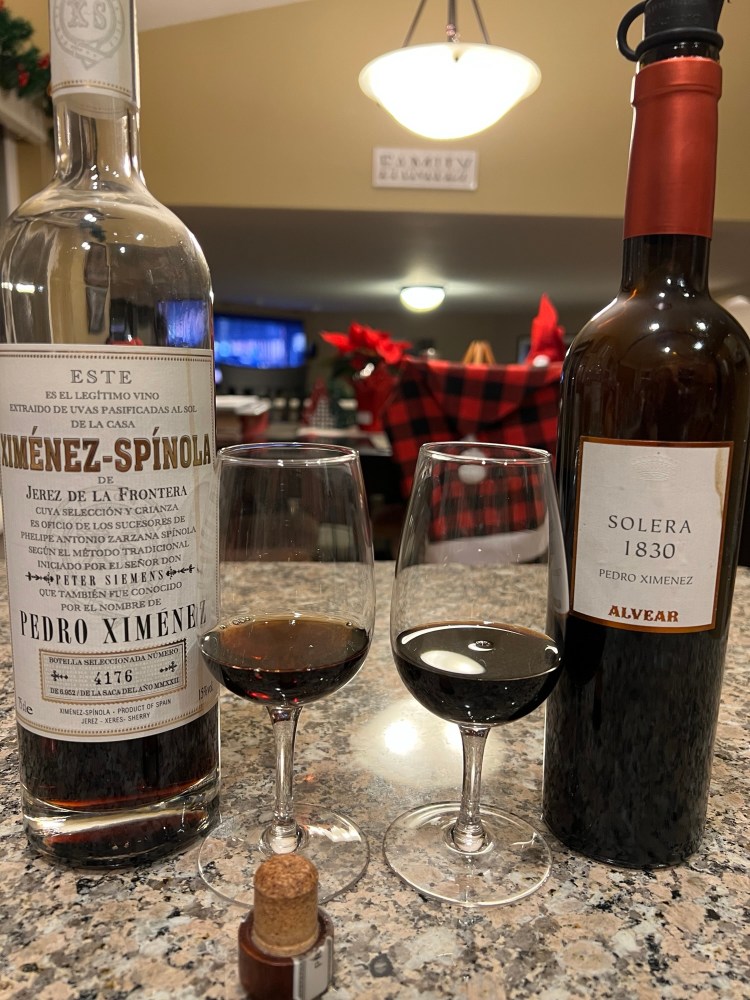
Sherries that are made by oxidative methods enter a barrel aging system called a solera. Soleras are a method of aging blended fractions of wine for extended time periods. This method creates a consistent product year after year, even though these wines do not have a vintage listed on the bottle. Barrels within the same solera system are called criaderas. Each criadera is given a relative age. Thinking of a criadera like an inverted pyramid, the bottom level has the oldest wine and is also known as the solera. The next level is the 1st criadera and has younger wine, just above it is the 2nd criadera. The wines in the 2nd criadera are younger than the 1st. Each criadera level is younger than the one previous. The entire system can have many criadera levels, depending on the style being created by the producer. When the producer goes to bottle their wine, they remove the desired volume from the solera, where solera is referring to the oldest wine. The volume removed never exceeds 40% of the total volume of the oldest wines in the solera. These barrels are then topped off with wine from the next level, the 1st criadera. The 1st criadera is topped off with wine from the 2nd, and so on. The highest level in the criadera is topped off with wine from sobretablas. Sobretablas are young wines that have been fortified and are resting in barrels that are not part of the solera system. Keeping this all in mind, this week I tried 2 different Pedro Ximenez (PX) wines from old solera systems, one from 1918 and one from 1830. What these years indicate is the year the oldest wine in the solera is from. Some fraction of the wine in these bottles dates back to these years.
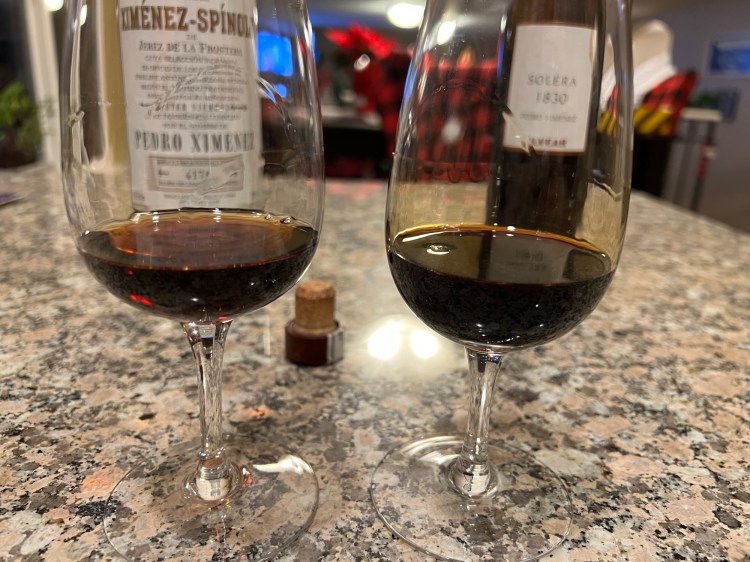
This week, I had a 1830 Alvear Solera PX and a 1918 Very Rare Ximenéz-Spínola PX. These wines are both brown in color, with the 1918 being transparent (similar to vanilla extract) and the 1830 being deep brown and opaque (similar to dark corn syrup or molasses). This is a good time to click back to last week’s post about non-oxidative PX and see that all three of these wines started out as the same light color!! The 1830 coats the glass like motor oil coating the drip pan when draining the old oil. The 1918 has aromas of vanilla bean, raisins, nutmeg, walnuts, toffee, chocolate, coffee, and dried figs. The 1830 has raisins, molasses, dark chocolate dark brown sugar, fig preserves, and caramel. As you can tell, these wines differ significantly just in their aromas and appearance. These differences continue on the palate. The 1918 has more acidity and alcohol while the 1830 has a fuller bodied texture. The 1830 is far more viscous and feels like it is coating my mouth and throat. Both of these wines are lusciously sweet, but the sugar content of the 1830 is higher (coming in at a staggering 480 grams per liter, compared to a mere 350-400 grams per liter in the 1918). The prolonged solera aging of these wines allows for evaporation of water and alcohol in the summer heat of Andalusia, Spain. This helps further concentrate the flavors that develop during the oxidative process. These wines were a fun splurge and fascinating to compare side by side! They are both phenomenal treats after a long day during the holiday season! If you scroll back to the PX post from December of 2020, you will see that these vary tremendously from the Osborne discussed in that post!
-TheLooseTannin

