
Savagnin is an old white grape that likely originates in northeastern France and southwestern Germany. There are a few genetic mutations of the grape which are known as Savagnin Blanc, Savagnin Rose, and Gewurztraminer. It is a parent grape to many grapes including Cserszgi Fűszeres (there will be more on this grape in the coming weeks) and Siegerrebe. It is not the same as Sauvignon Blanc. Savagnin is commonly grown in the Jura region of France where it is used in the production of vin jaune. Vin jaune is a wine made by extended oak aging with the growth of a yeast layer called flor, which protects the wine from exposure to oxygen. This is a similar process to biologically made Sherry wines, such as Fino and Amantillado. The color of the wines is lighter (yellow, as the name ‘jaune’ indicates) and gives nutty and yeasty character to the final wine. It can also be used for sweet and sparkling wine production.
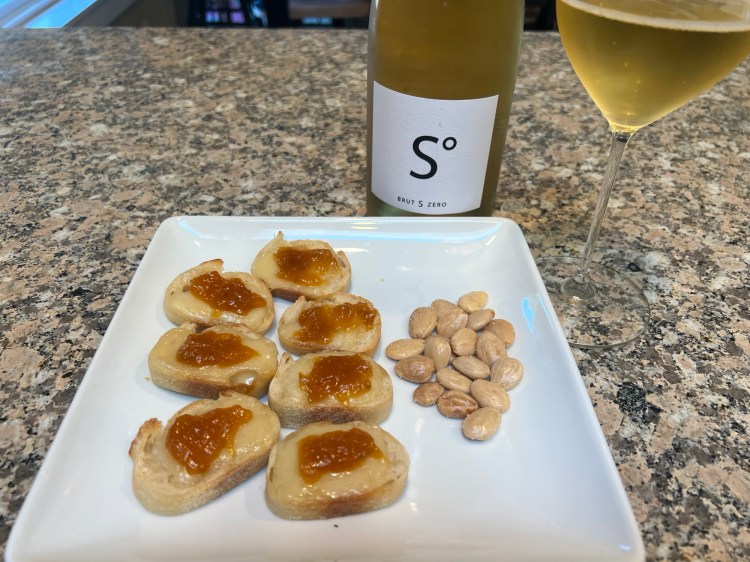
This week I drank a non vintage (NV) Domaine du Pelican Cuvee Brut S° (Brut S Zero) sparkling Vin de France. This bottle was a blend of 90% Savagnin from 2018 and 10% Savagnin from 2019. This wine was made using the same method as Champagne and spent 13 months on the lees before disgorgement. As the name indicates, there was no dosage added. This wine is a medium lemon color with aromas of lemon peel, bread dough, white grapefruit pith, green apple, and ginger. This dry wine has bright acidity that balances the fuller body and sparkling character of this wine. The pithy bitterness is present under the fruit and bread notes on the front and mid palate. On the extended finish, these notes give way to salinity and nutty character. This sparkling wine is more savory than most. These unique qualities make it surprising and delicious! It made a delicious pairing with melted comté and apricot preserves on toasted baguette slices along with marcona almonds.
-TheLooseTannin
 A Trip Around the World of Wine in 52 Weeks