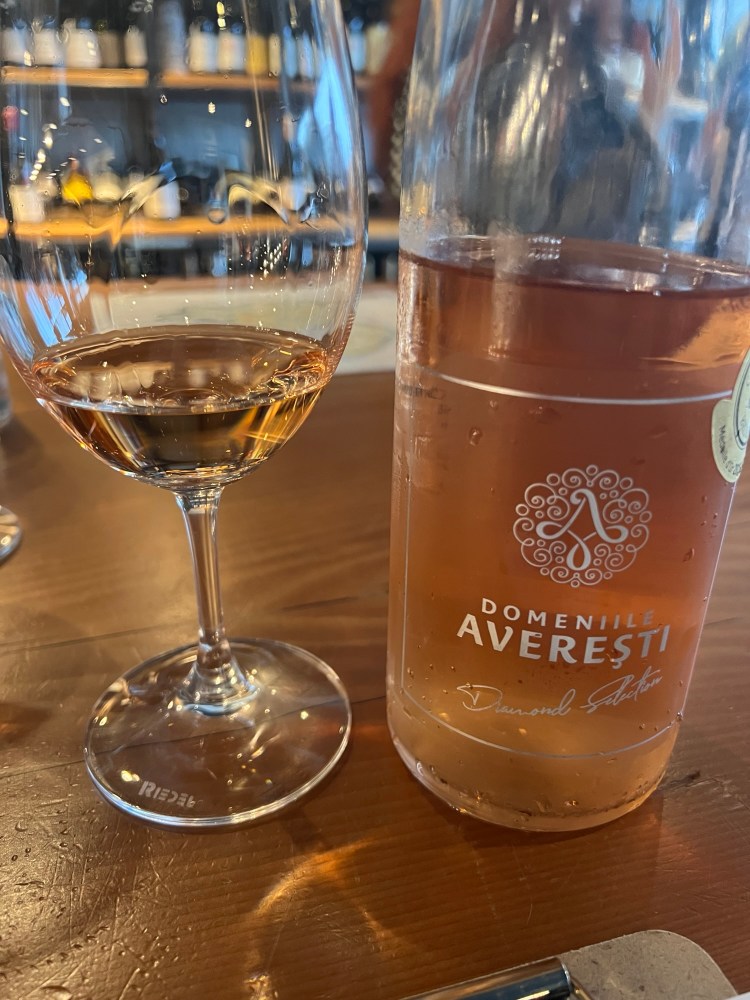
Busuioacǎ de Bohotin is a rare red grape grown in the Bohotin region of Eastern Romania. Most red grapes have white pulp and the resulting wines get their color from contact with grape skins. Busuioacǎ de Bohotin is a teinturier grape, meaning is one of the few that has colored pulp. This grape gets its name due to a light basil note it possesses. Basil is known as busuioc in Romanian. It was originally identified as a pink version of Muscat and is believed to be a color mutation of it. As you may have guessed, it can be used to make sweet wines or dry wines, similar to that of Muscat. Busuioacǎ is prone to fungal infections, making it a difficult grape to grow. Most plantings have to be located where there is air movement and good sun exposure to ensure the vines are dry in the summer heat. This prevents the spread of fungal diseases. These vines are also more cold tolerant than many. They are able to withstand temperatures down to 0℉, even though temperatures in Bohotin do not usually reach this low.
This week I drank a 2022 Diamond Busuioacǎ de Bohotin Dry Rosé. This wine was a lovely pale salmon color and had intense aromas of wild strawberries, raspberries, rose petals, pink grapefruit and basil. It exhibited a fuller body than I anticipated. Despite being dry, there was a perceptible amount of sugar that was balanced by a higher level of acidity. The fruit and floral notes dissipated in a reasonable amount of time but did not linger. This wine would be refreshing on a nice spring day. It could be served with lighter meats and seafood, salad or with aged cheeses.
 A Trip Around the World of Wine in 52 Weeks