Rotgipfler is a white grape believed to be indigenous to the Thermenregion in Lower Austria. This area has been making wine since the Golden Ages but had a rebirth in the 1980s following a scandal when it was found that winemakers were adding diethylene glycol (commonly known as antifreeze) to their wines. This adulteration was done to increase sweetness in the wines to compete with wines from other areas. Thankfully, no harm was reported but resulted in the government establishing new stricter wine laws to control labeling and quality of the wines produced. Thermenregion consists of two subregions, the north which borders the eastern edge of the Alps and the south that includes the Vienna Basin. The north, with more sloped vineyards and higher altitude, mainly produces white wines while the south mainly produces red wines. According to the Thermenregion DAC website, plantings of Rotgipfler are almost exclusively in Thermenregion and account for about 5.2% of total regional vineyards. The grape is an offspring of Traminer (Savignin) and Roter Veltliner. The grape was originally discovered by a pharmacist in the mid 19th century then exported to the Alsace region of eastern France, but never caught on in the region.
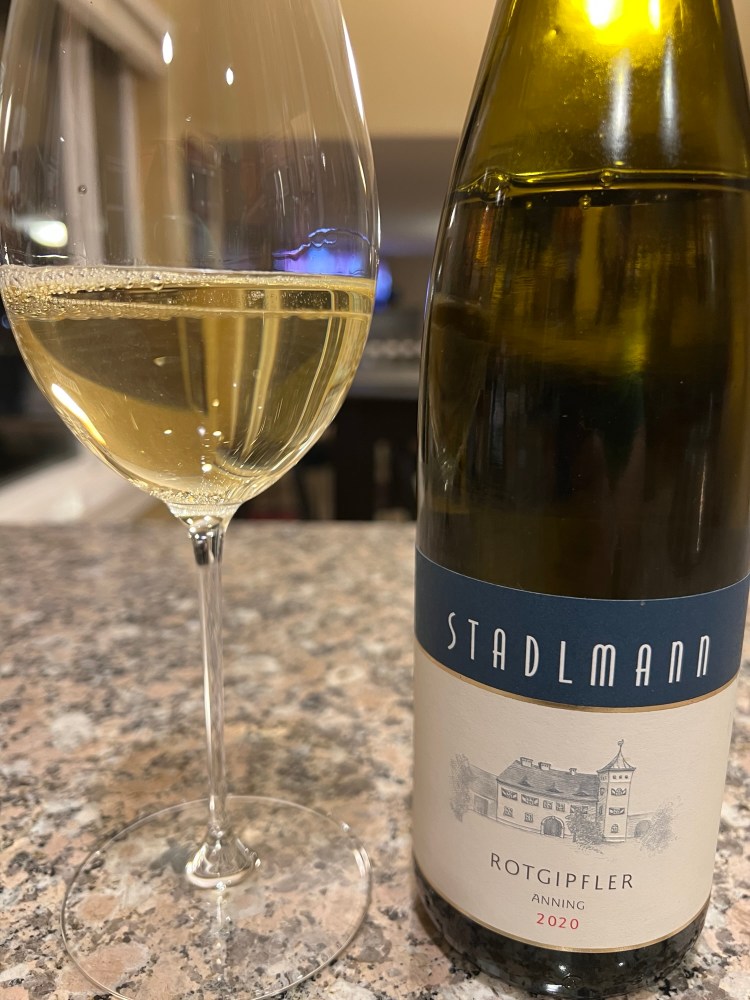
The wine I drank this week is a 2020 Stadlmann Rotgipfler from Thermenregion. This wine is a pale lemon color with aromas of citrus fruits like white grapefruit and lemon peel. There are also notes of green apple, yellow pear, fresh herbs, honeydew, white flowers and saline minerality. This dry wine is fuller bodied with a moderate level of acidity. The level of alcohol is at the low end of moderate. The overt fruit, floral and herbal notes dominate the front and mid palate then subside to leave a somewhat bitter pithy and saline finish. This wine is rich enough to pair with a rich sauce on lighter proteins, like chicken with mushroom sauce or white fish and butter herb sauce. The weight of this wine makes it a comforting white wine for cooler weather.
-TheLooseTannin
 A Trip Around the World of Wine in 52 Weeks