Most wine drinkers are familiar with Chardonnay as the buttery white wines of California, the crisp, acidic wines of Chablis, or the Blanc de Blanc Champagnes with long aging potential. A far less common version of Chardonnay is as a dessert wine. Chardonnay is a highly versatile, somewhat neutral grape that takes on the character of the ‘terroir’ or the winemaking methods. It is widely grown around the world because it can be grown successfully in a wide range of climates. Within the region of Jura, in eastern France, there is Macvin du Jura blanc, which has been made since at least the 14th century. This wine can be made with five different grapes, both red and white, but the most common are Chardonnay and/or Sauvignon Blanc. It is made by stopping the fermentation process (that either never started or barely started) by adding marc (pronounced mahr), a brandy made from pomace. Pomace is the leftover products following grape pressing, including grape skins, seeds, and pulp. The amount of marc added must total one-third of the total volume of wine and brings the alcohol by volume to between 16-22%. The marc, by law, is required to be made on site at the winery and contain at least 52% alcohol.
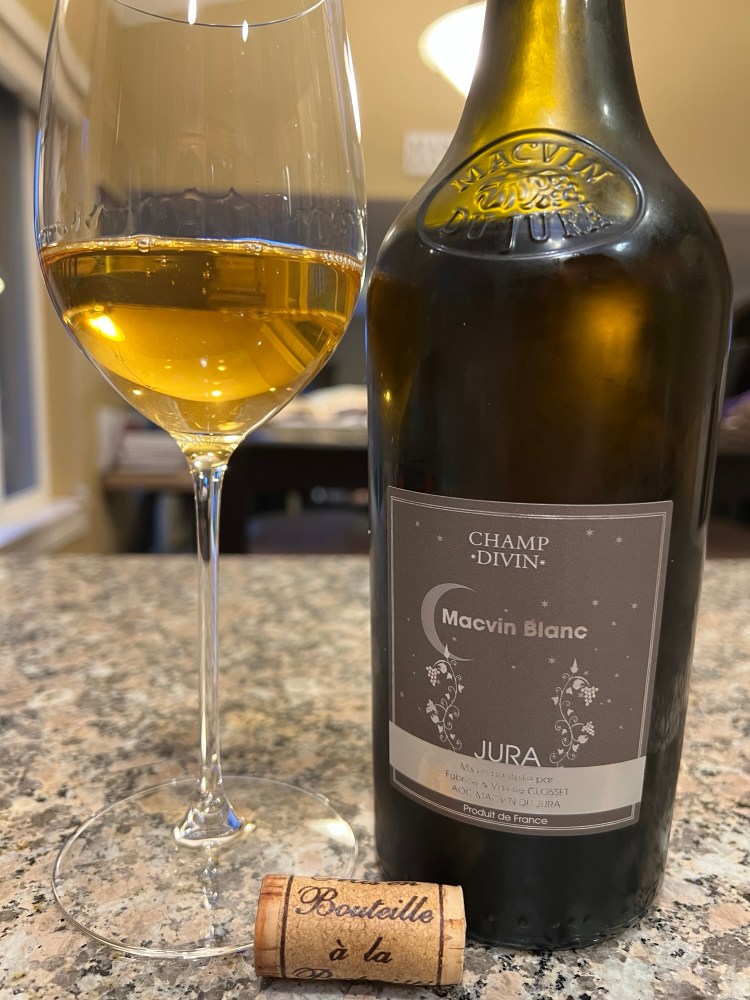
The wine I drank this week is a non-vintage (NV) Champ Divin Macvin du Jura. This wine is fortified then aged for 2+ years and blended. Prior to this aging, the marc is aged in barrels for over a year. According to the producer, it is then aged in barrels for at least a year after blending. Champ Divin uses 100% Chardonnay in their Macvin du Jura. This wine is a vibrant lemon yellow color and coats the inside of my goblet as I swirl my glass. Aromas of hazelnuts, golden raisins, toffee, walnuts, dried pineapple and candied orange peel jump from the glass. This sweet, full bodied wine has a high level of alcohol. The significant level of acidity is well integrated and balances the residual sugar. The nuttiness on the front palate gives way to dried and candied fruits on the mid palate and extended finish. This is a very unique and interesting wine to drink on its own as an aperitif. It should be chilled or poured over ice (this is a rare instance when I would recommend wine with ice!). It can be paired with desserts, light cheeses or a cheesy risotto. This is unlike most wines you’ll drink but definitely worth a try!
-TheLooseTannin
 A Trip Around the World of Wine in 52 Weeks