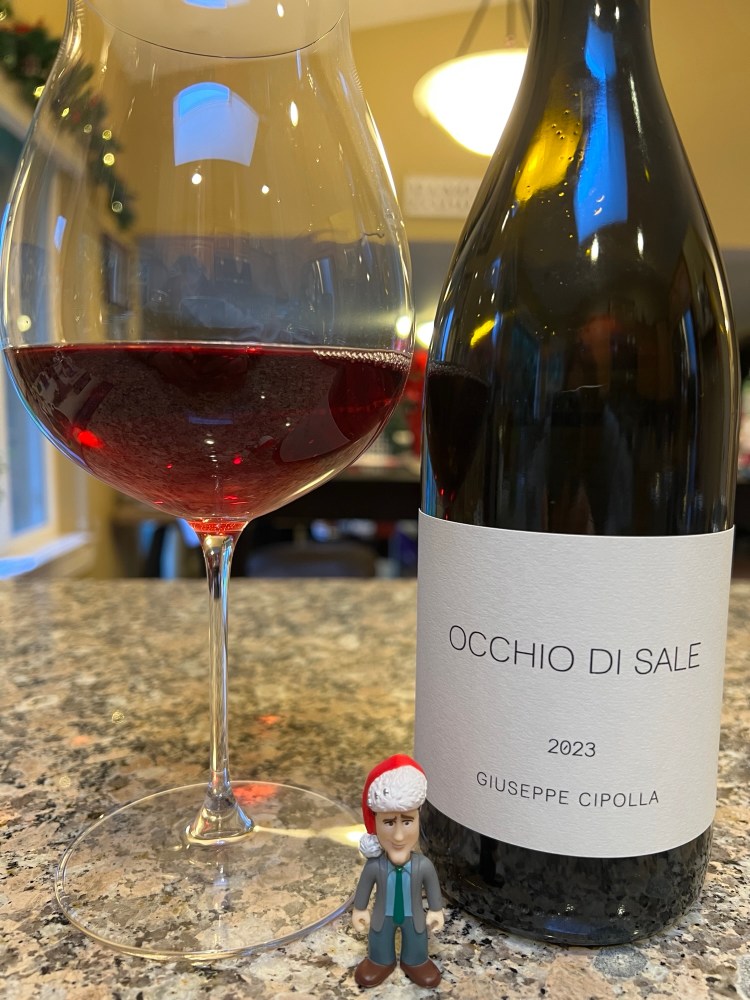
This week’s wine is a good wine to discuss winemaking methods for producing rosé wines. The wine I drank this week is about 80% direct press Nero d’Avola. Nero d’Avola is the most widely planted red grape in Sicily (discussed February 3rd, 2021). Direct press is when grapes are brought straight from the vineyard to the press. This is the common process used to produce white grapes. It limits the contact of the juice with the skins, resulting in minimal color in the wine. Nero d’Avola is a deeply colored grape and used to add color to wines into blends. Another 15% of Nero d’Avola is co-macerated with 5% white grapes (Cataratto, Inzolia, and Muscat). This short co-maceration allows some color to bleed into the blend but is limited because this process took place prior to fermentation. Color compounds have increased extraction when alcohol levels and temperatures are higher. The two juices are fermented separately then blended prior to the aging process.
The wine I drank this week was a 2023 Guiseepe Cipolla ‘Occhio di Sale’. The name translates to ‘eye of the salt’ and was given this name due to the high concentration of clay and chalk in the soil where the grapes were grown. This wine is a pale ruby color with some tartrate crystals that have sunk to the bottom. Tartrate crystals are nothing to fear. Sometimes called ‘wine diamonds’, they occur when wines high in tartaric acid have it fall out of solution. This can happen especially when the wine is chilled. Many producers stabilize their wines and remove crystals before bottling. This is done purely for aesthetics and has no effect on the taste of the final wine. Others opt to forego the process. Tartaric acid is the same as cream of tartar, a powder form used in baking. This wine has aromas of wild strawberries, cranberries, raspberries, red vines candy, roses, and violets. The ripe red fruit notes are made more vibrant by the moderate level of acidity. It is a lighter bodied dry wine that has minimal tannins. The red fruit lingers on the long finish. This wine would be great served slightly chilled or at room temperature. It would be a great alternative for a thanksgiving wine, instead of the normal Beaujolais, Pinot Noir or Riesling.
-TheLooseTannin
 A Trip Around the World of Wine in 52 Weeks