
Furmint is a white grape indigenous to the Tokaj region of Hungary. It is a highly acidic grape that is used to make varietal dry wines as well as the famous blended Tokaji sweet wines. When Furmint is blended, its common blending partner is Hárslevelű, an aromatic white grape variety. Furmint is used for sweet wines because it is susceptible to the beneficial Botrytis cinerea fungus, also known as noble rot. Botrytis can also lead to bunch rot, which damages grapes. When well managed through good vineyard practices and when ideal environmental conditions occur, the fungus can improve complexity of the wine. Botrytis filaments puncture the skin of grapes, which helps dehydrate the grapes and concentrates both flavors and sugar in the final wine while maintaining the high level of acid. It also imparts many flavors, such as ginger, dried apricot, and honey. These grapes need to be hand harvested to select the best grapes. This prevents off flavors in the final wine, but can increase costs. The shriveling of the grapes on the vines results in much smaller yields for sweet wines than for dry wines. In Hungary, there are different classifications due for sweetness levels in the final product. Wine law ranks wines on puttonyos for most of the sweetest wines. A puttony is a bucket. For example, a wine of five puttonyos, will be made with five buckets of the shriveled grapes. This classification is used for wines of three to six puttonyos (minimum of 120g/L of sugar for 3-4 puttonyos and 150g/L for 5 and 6 puttonyos). There is also late harvest, which has a lower proportion of botrytis affected grapes, but still has a sugar level of 45-110g/L. For perspective, Coca-Cola has about 110g/L of sugar. There is also the very sweet and very rare, Eszencia. This wine has a minimum sugar level of 450g/L and takes years to ferment to a low level of alcohol, usually less than 5%. With market trends going away from sweet wines, many producers are now making dry wines. Previously, dry wines were only made when noble rot failed to form. Some growers are now choosing to pick grapes while still healthy before noble rot can take hold. Other growers are opting to plant new vineyards away from areas that have high levels of humidity needed for the Botrytis to form and with better air circulation.
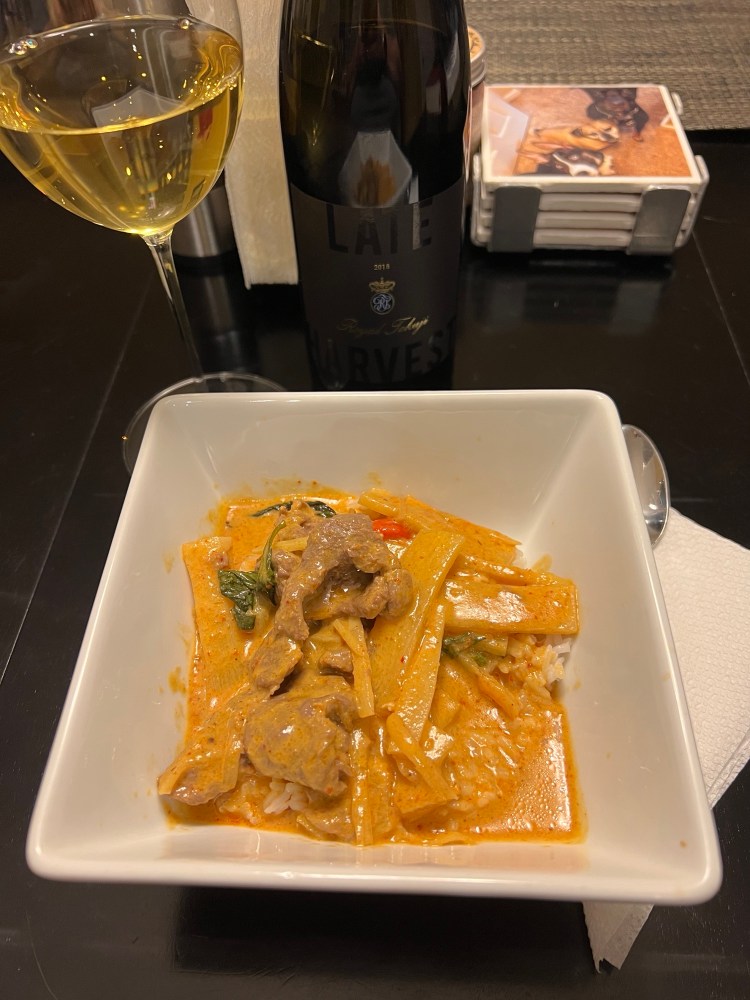
This week, I drank a bottle of 2018 Royal Tokaji Late Harvest. The producer lists the vineyards as containing about 70% Furmint, 25% Hárslevelű, and about 5% Yellow Muscat (Moscato Giallo). The producer states this wine contains about 108g/L of sugar. This wine is a vibrant straw yellow with brassy highlights. Aromas of candied ginger, honey, dried pineapple, candied orange peel, dried apricots, and nutmeg filled out the nose. On the palate, this full bodied sweet wine is well balanced by a crispy acidity. It had an alcohol level at the lowest end of the moderate range. I chose this bottle this week because I wanted to pair it with a bowl of Thai red curry during inclement weather. The candied fruit and baking spices paired wonderfully with the spices used in the curry. The sweetness was a fantastic counterpoint to the spice in the dish. This pairing was addicting and my glass disappeared before I knew it! This wine would also be beautiful with other Thai cuisine as well as Indian food. It is versatile because it could be served as an aperitif or with a fruit and cheese plate following a meal. Well made sweet wines don’t always get the credit they deserve but can be absolutely delightful and this is a good example of an affordable option.
-TheLooseTannin
 A Trip Around the World of Wine in 52 Weeks