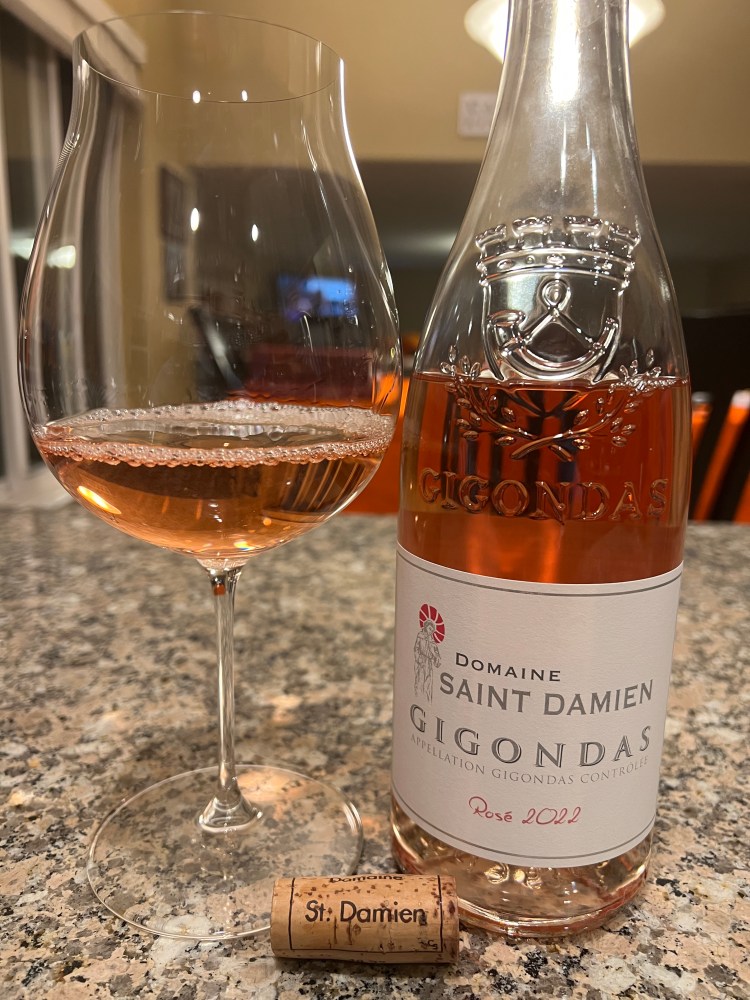
Gigondas is an appellation in the southern Rhône valley in southeast France. The southern Rhône is known for the production of red blends containing Grenache, Syrah, and Mourvèdre. The region also allows the use of Cinsault and Carignan in the final wine. Vineyards in this area benefit from cooling effects of being grown at up to 1300 feet elevation. The area is subject to the Mistral, which also cools the area but can cause extra drying, which is especially problematic during drought years. The Mistral is a strong, cold northerly wind that blows from the direction of Alps down to the Mediterranean. It is strong enough to damage young and less sturdy vines. It allows for air movement which decreases the risk of fungal infections and spring frost in the vineyard. About 99% of wine production in Gigondas is red wine but rosé is allowed. There is also a small amount of white wine made.
This week, I chose a 2022 Domaine Saint Damien Gigondas Rosé. Unlike other wines in this region, this wine was not a majority Grenache Noir, instead it was about 80% Cinsault. The remaining 20% was Syrah. According to the producer, the Cinsault vines were planted in 1970. This wine was a pale pink-orange color with aromas of ripe strawberries, raspberries, watermelon, red cherries, and dried herbs. The south of France, especially Provence, is known for the production of light, easy drinking rosé wines. About 120 miles west of Provence, is the rosé region of Tavel. Tavel is known for a heavier, darker, higher alcohol rosé that pairs well with many types of cuisine. Gigondas is to the east of Tavel, on the left bank of the Rhône River. Just as it is geographically located between Tavel and Provence, so too is this style of rosé. It is slightly more tinted than the wines of Provence but fuller bodied like those of Tavel. It differs from them by being largely composed of Cinsault, while those styles are predominantly Grenache Noir by law. This dry wine also has a refreshing acidity and moderate level of alcohol like those of Tavel and Provence. The red fruit notes are concentrated and remain on the palate for a considerable amount of time. Despite these regions creating different styles of rosé, they are all known to be of good to very good quality, and this wine is no different. This bottle would be great with a charcuterie plate, smoked salmon, light meats, pizza, Indian food, pasta and many more!
-TheLooseTannin
 A Trip Around the World of Wine in 52 Weeks