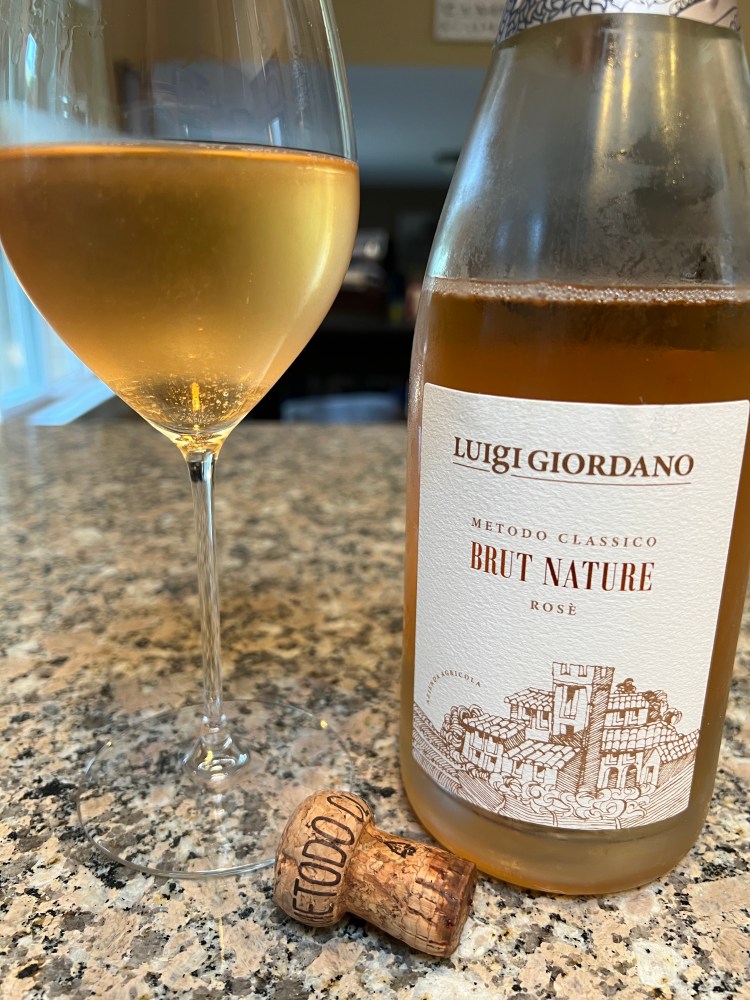
This week, I opted to discuss a common grape that used the traditional method of making sparkling wine to create a less common product. Nebbiolo, the red grape from the Piedmont region in northwestern Italy, is typically used in the production of Barbaresco and Barolo. It is regarded for its high level of tannins and acidity, red fruit, floral and earthy notes, as well as its ageability. Nebbiolo is mostly used in the production of dry still wines but can also be used to make rosés and sparkling wines. Traditional method sparkling wines are made using the same method as champagne. It is a long process that requires the fermented wine to be bottled for an extended period with a ‘liqueur de tirage’. The liqueur de tirage is the french term for a mixture of yeast, yeast nutrients, sugar, and still wine that gets added to the fermented still wine prior to the wine undergoing its secondary fermentation. During this process, the bottle is capped and the bottles are placed onto a rack at an angle such that the neck of the bottle is tilted downward. As the wine undergoes the secondary fermentation, the yeast consumes the sugar. This process results in the production of carbon dioxide. The carbon dioxide gets dissolved into the wine, increasing the pressure inside the bottle creating the delicate bubbles that champagne and other wines made using this method are known for. It also adds body and flavors of bread to the final product. The yeast cells die off as the sugar and nutrients are exhausted. The bottles are turned a quarter turn daily, either by hand or machine. This process allows the yeast cells to collect in the neck of the bottle. To remove this, the necks of the bottles are chilled, then removed via the disgorgement process, a final mixture of sugar and still wine is added, then the bottle is corked. When purchasing wines made with this method, it is useful to check if the label lists a disgorgement date. This information is important because it is an indicator of how mature the wine is. Many sparkling wines are non-vintage, meaning they are blends of multiple vintages. In this instance, the disgorgement date provides the consumer with a general idea of the age of the base wine. Some are vintage wines, which list the year the grapes were harvested on the label. In this case, providing the disgorgement date allows the consumer to maintain cellars and store bottles based on ageability potential.
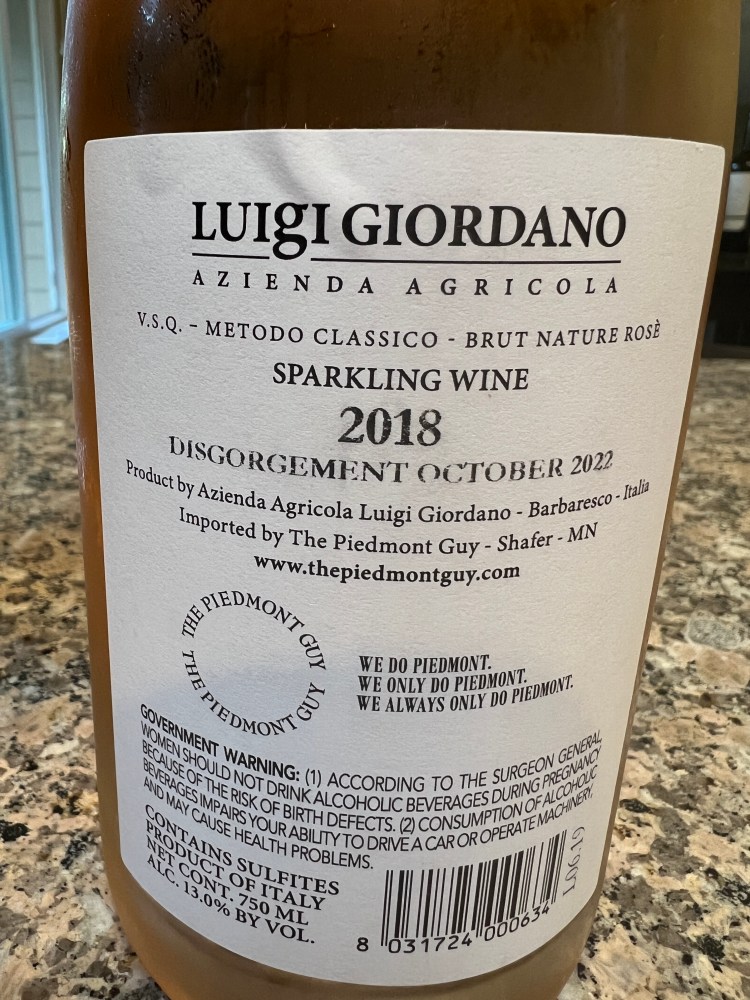
This week, I drank a 2018 Luigi Giordano Brut Nature Rosé from Piedmont. The label indicates this bottle was disgorged in October of 2022, 4 years after the grapes were harvested. This wine was a pale salmon color with constant streams of small bubbles rising to the surface. Aromas of wild strawberries, watermelon, raspberries, white grapefruit, and fresh bread were observed with some effort. This dry, medium bodied wine had a creamy, persistent mousse from the aging process. It had a moderate level of alcohol and bright acidity. The acidity balanced the fresh fruit notes on the palate. Flavors of rhubarb and lemon pith were also found. This wine had a minimal amount of tannin that contributed some texture. Sparkling wines are a great option when undecided on pairings because they are extremely food friendly but also easy to drink on their own. This bottle would be great at a summer cookout, paired with grilled salmon, or served with a charcuterie plate.
-TheLooseTannin
 A Trip Around the World of Wine in 52 Weeks