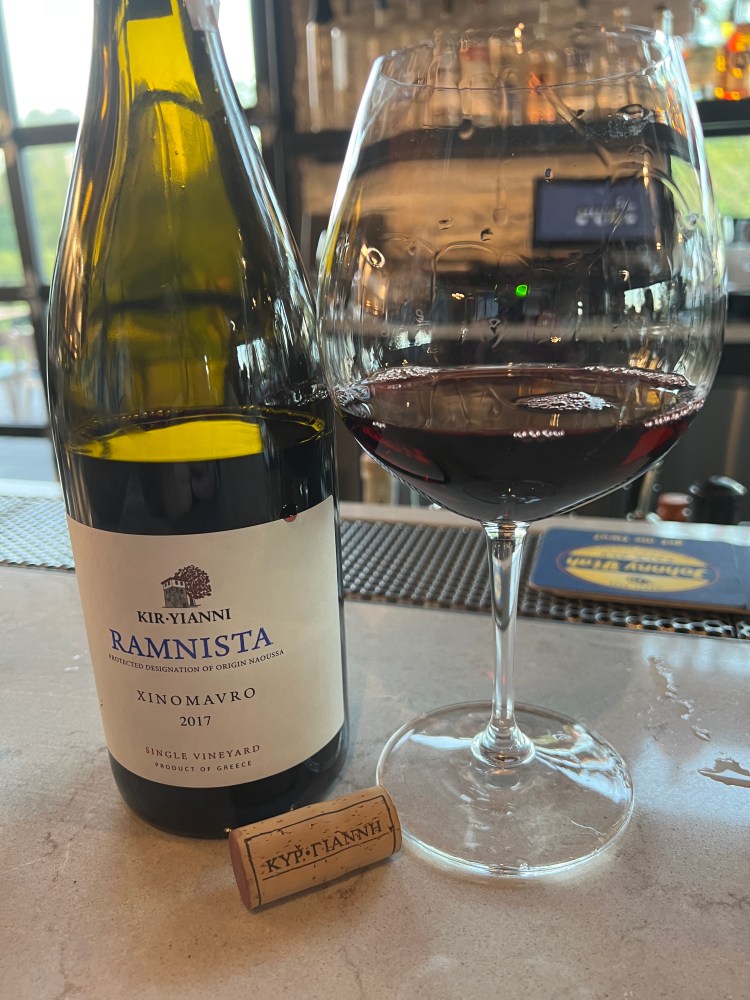
Xinomavro is a red grape indigenous to northern Greece. I previously discussed a blended wine made with it on February 16th, 2022. This week, I opted for a varietal wine. The name Xinomavro translates to mean ‘acid black’ due to the grape’s color and level of acid. It is the second most widely planted red grape in Greece, behind Agiorgitiko. Xinomavro is the only grape variety allowed by PDO regulations to be grown in the northern appellation of Náoussa, but it can be found in cool climates around Greece. Plantings outside of Greece are rare. It has been suggested by some that it may be genetically similar to Pinot Noir but this theory has been disproven through DNA testing. One commonality the two grapes share is that the wines produced using them can vary widely in styles so it is difficult to make broad generalizations. Xinomavro can be used to produce rosé, still and sparkling varieties of wine, just as Pinot Noir is.
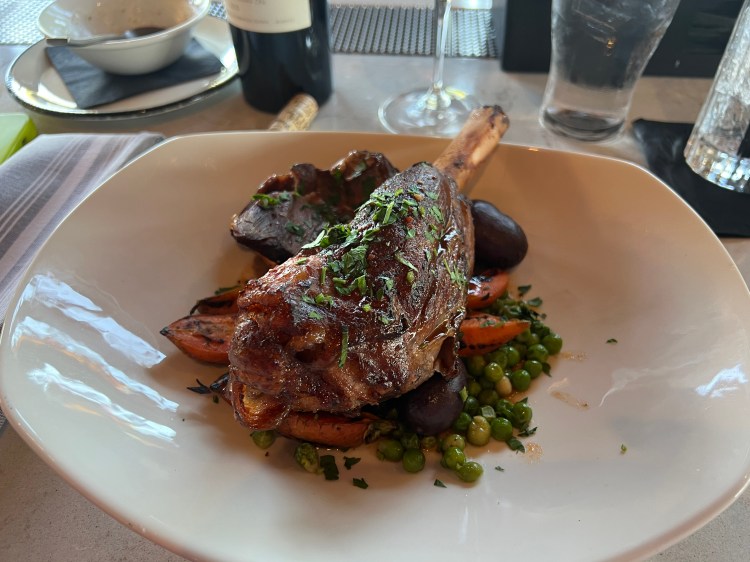
This week, I drank a 2017 Kir-Yianni Xinomavro from Naoussa PDO. This was a single vineyard wine, meaning all the grapes were grown in a single designated vineyard. With this being a 2017 vintage, it indicates these wines do have the potential to age. It was a pale ruby color with little color variation towards the rim. Aromas of bright red fruits such as raspberries, cherries, and currants combined with the scents of rose petals and the earthiness of mushrooms. The acidity was significant enough to balance heavier cuts of game meat, like the lamb shank I paired it with. The tannins had weight but were well rounded. Both the alcohol and tannin contents were moderate. The palate consisted of wild strawberry, ripe red cherry, vanilla, coffee, with earthiness and stoney minerality. Many Xinomavro wines can be simple but this bottle was a complex example of the grape’s potential. If left to age longer, the complexity would continue to evolve. This wine could be consumed year round with slow braised meats, grilled pork chops, or beef kabobs!
-TheLooseTannin
 A Trip Around the World of Wine in 52 Weeks